

Choosing between induction vs electric cooktops often comes down to cooking style, safety, and budget. Both options handle everyday cooking well, but they heat food in very different ways. This guide breaks down the key differences to help make the right choice easier for any kitchen.
At Appliances 4 Less Norman, we offer quality scratch and dent appliances at prices that make sense for real households. We carry ranges, refrigerators, washers, dryers, and other Home Appliances, all inspected and ready for a new home.
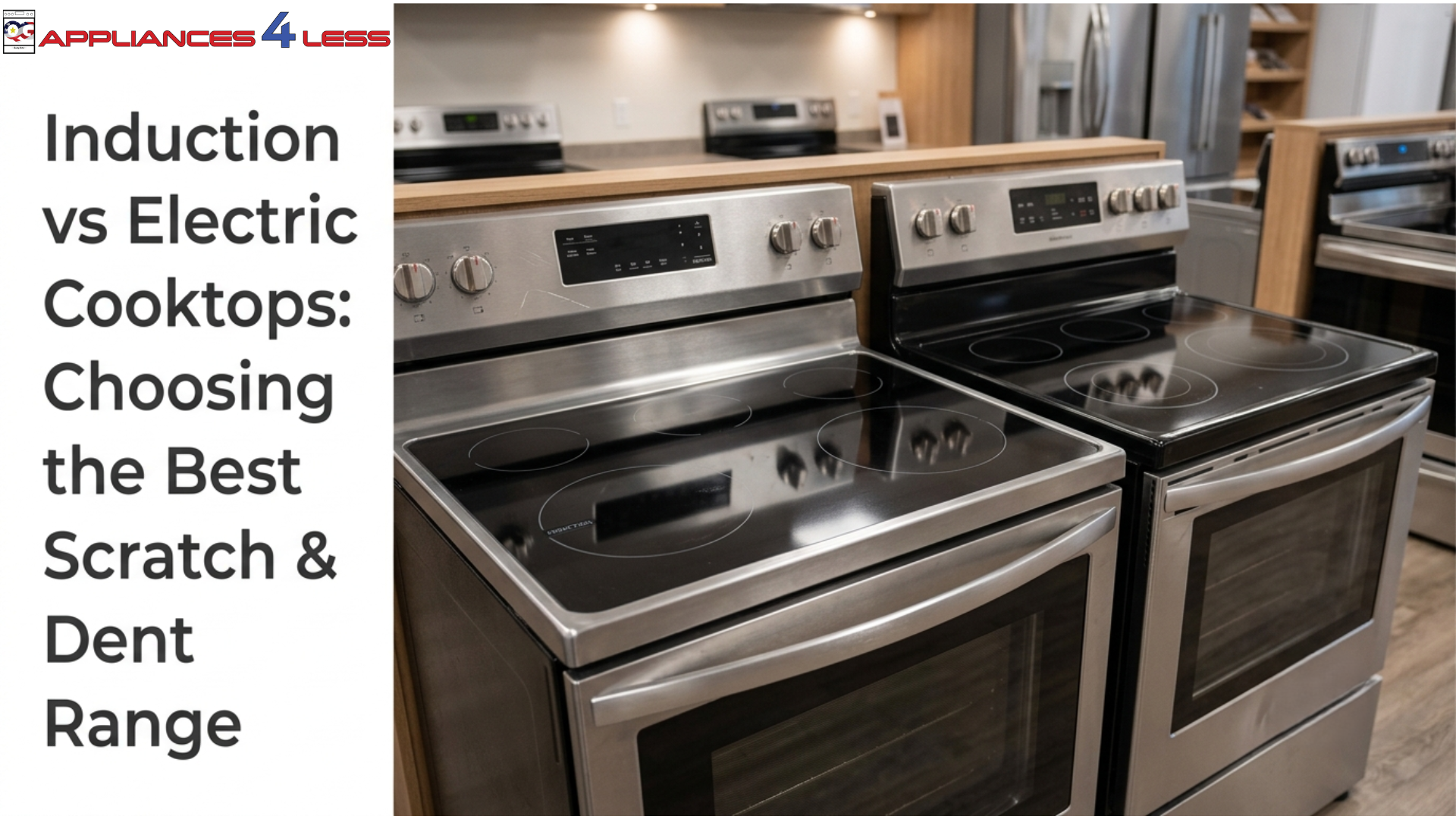
What Is the Difference between an Induction and an Electric Cooktop
An induction cooktop relies on magnetic energy to warm the pan itself, giving cooks fast heat-up times and sharp control over temperature. An electric cooktop instead uses coils or a glass surface that heats up first and then transfers warmth to the cookware. Both get the job done, just through different methods.
Which Cooktop Type Works Better for Different Cooking Styles
Cooks who want fast heat-up times and precise temperature changes often prefer induction for everyday meals. Those who value a more traditional cooking feel with steady, even heat may find electric cooktops better suited to their kitchen routine.
Advantages of an Induction Cooktop
- Heats up and cools down much faster overall.
- Offers precise temperature control for delicate cooking.
- Surface stays cooler, reducing accidental burn risks.
Disadvantages of an Induction Cooktop
- Requires magnetic cookware to work properly.
- Typically costs more than standard electric cooktops.
Advantages of an Electric Cooktop
- Works with most standard pots and pans already owned.
- Generally more affordable than induction cooktop models.
Disadvantages of an Electric Cooktop
- Takes longer to heat up and cool down.
- Surface stays hot longer after cooking finishes.
We keep a steady inventory of both induction and electric cooktops at scratch and dent pricing throughout the store. Visiting in person allows buyers to compare styles and features before making a final decision on their next kitchen appliance.
How to Decide between Induction and Electric Cooktops
Shoppers with induction-ready cookware and a preference for speed often lean toward induction cooktops for daily use. Those who want to keep existing cookware and prefer a lower price point may find electric cooktops more practical overall.
Shoppers browsing Appliances 4 Less Norman often find that comparing both cooktop types side by side helps clarify which option truly fits their household. Cooking habits, budget, and existing cookware all play a role in making the right choice.
Conclusion
Deciding on induction vs electric cooktops comes down to cooking style and budget. Appliances 4 Less Norman makes it easy to compare both options and find a reliable cooktop for any home.
FAQ
What is the difference between induction and electric cooktops?
Induction uses magnetic energy for fast heating, while electric uses coils or glass for gradual heat.
Does induction cooking require special cookware?
Yes, induction cooktops require magnetic cookware, while electric cooktops work with most standard pots and pans.